
4 hr
Old Delhi Street Food Tour with Rickshaw Ride
Sample authentic Delhi flavors on a guided culinary journey through the capital's historic quarter
Reserve
Hand-picked by our editors — only the best 5 experiences from 14 reviewed.
Verified partners for every tour, free cancellation where available, and instant confirmation on every booking.
4 hr
Sample authentic Delhi flavors on a guided culinary journey through the capital's historic quarter
Reserve
3 hr 30 min
A generous 3.5-hour culinary journey through historic lanes as the city transforms from dusk to night
Reserve
4 hr
Navigate Old Delhi's vibrant bazaars by tuk tuk, taste authentic street snacks, and explore Mughal landmarks
ReservePrices from verified partners. Availability updates in real time at checkout. Free cancellation policies apply where shown.
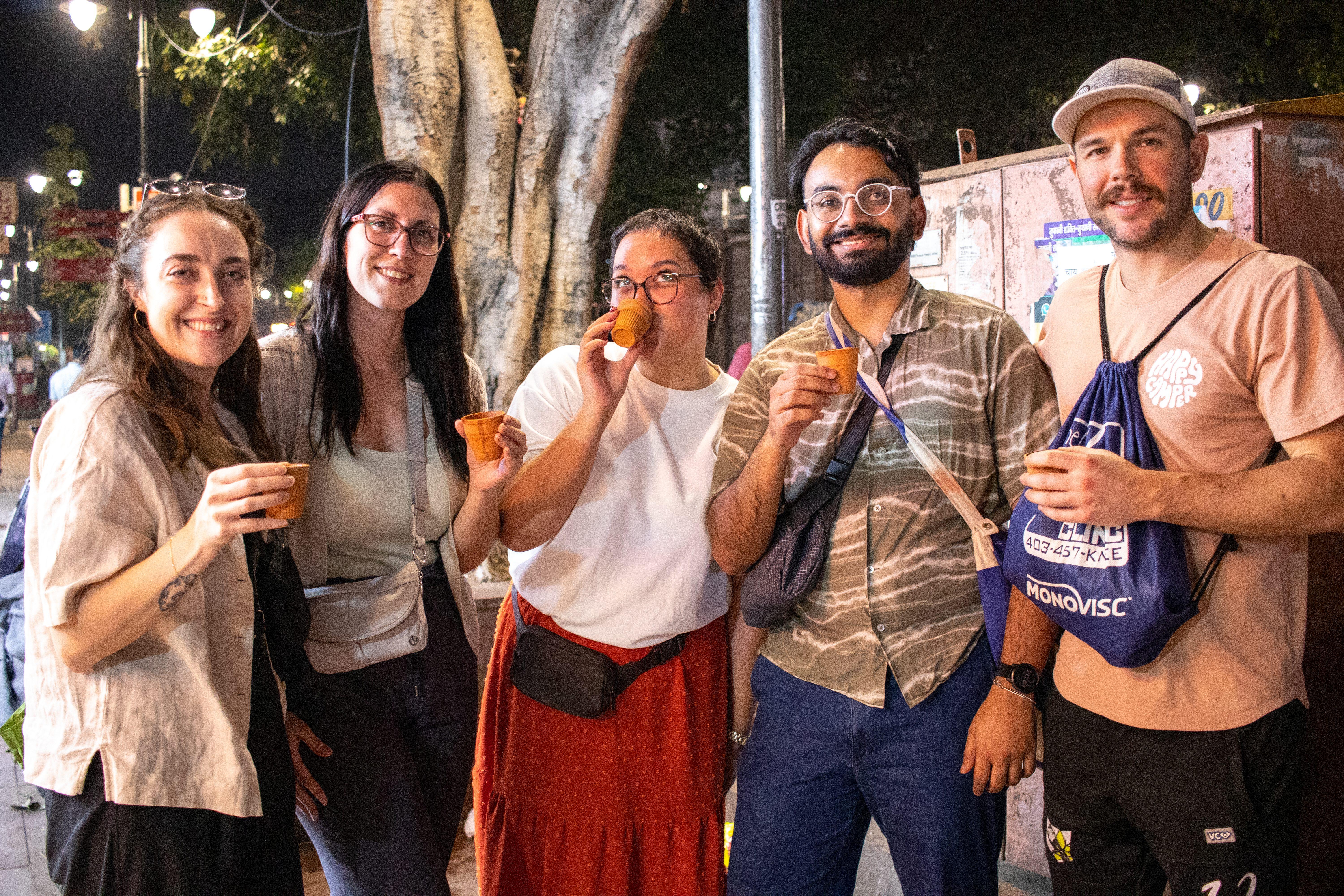
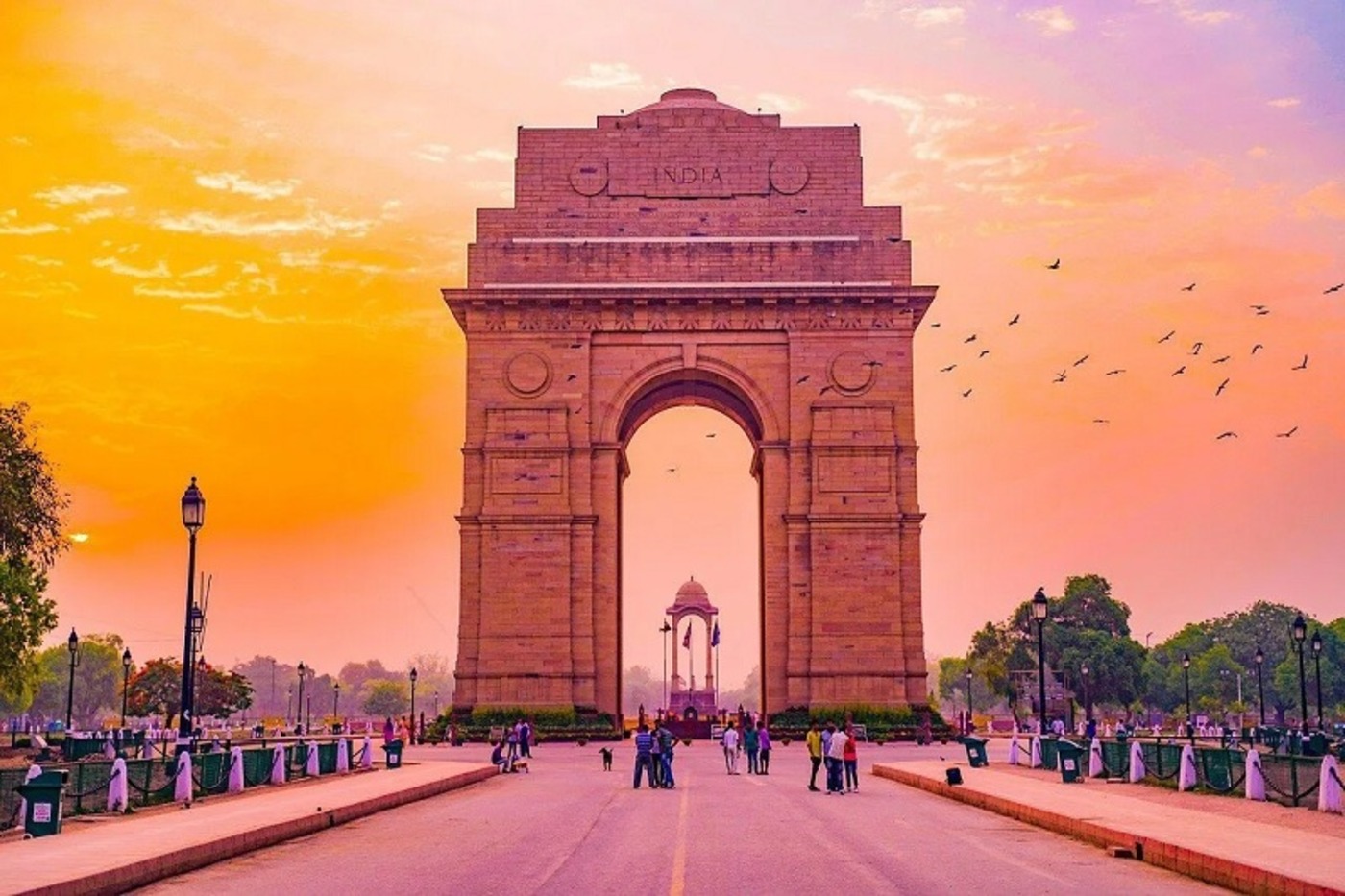
The landmarks, rooms, and views travelers on this tour remember — all visible on a single visit.
Famous for its variety of fried flatbreads stuffed with seasonal vegetables and spices.
An old delhi street food tour offers structured safety and curated insight, while independent travel provides the freedom to navigate the labyrinthine lanes at your own pace. Most visitors find the guided experience more efficient for tackling the complex alleys of this Delhi landmark.
| Feature | Top pick Guided Food Tour | Independent Exploration |
|---|---|---|
Logistical Support |
Full navigation and planning | Self-guided by map |
Social Experience |
Group interaction and shared culinary stories | Solo or private company only |
Curation of Vendors |
Hand-picked hygiene-vetted stalls | Personal trial and error |
Safety and Comfort |
Professional oversight of narrow alleys | Full responsibility for personal security |
Price |
Fixed fee per person | 0 INR (Public street area) |
Duration |
3–4 hours | Flexible according to preference |
| See tickets → |
Verdict: If you prioritize ease and local insight, choose old delhi street food tour tours, but opt for independent exploration if you prefer spontaneity and hold old delhi street food tour tickets for a DIY itinerary.
Choose your ticket, select your date, and reserve in under two minutes. Secure checkout handled by our verified partner.
Instant confirmation by email, with a mobile voucher you can save offline. No printing, no queuing at a collection desk.
Arrive at the entrance, show your voucher on your phone, and walk in. Most tickets include priority or skip-the-line access.
Practical details for your visit straight from our verified partners — hours, access, rules, and how to get there.
Chandni Chowk Road
Use Exit 5 for the street food tour meeting point.
Use Delhi Metro Yellow Line to Chandni Chowk station.
Hire a cab to the nearest accessible gate near the Old Delhi street food tour zone.
Modest clothing is recommended when visiting religious sites within the Old Delhi street food tour route. Comfortable walking shoes are essential for navigating uneven pavement.
Keep personal belongings in a front-facing bag to maintain security in crowded bazaar lanes. Large backpacks are discouraged due to the dense pedestrian traffic typical of an Old Delhi street food tour.
Photography is permitted in public areas, but always request permission before capturing portraits of local vendors. Avoid using bulky equipment that may obstruct narrow walkways.
The winding streets of the old city feature uneven surfaces and lack ramps. An Old Delhi street food tour requires significant physical stamina for extended walking.
Mobile phone use is allowed, though signal strength may fluctuate in deep alleyways. Ensure your device is charged for navigation.
The vibrant atmosphere can be overwhelming for young children. Parents should supervise closely as the Old Delhi street food tour passes through busy market zones.
Samples are provided by vendors; carry bottled water for hydration. Dietary restrictions should be communicated before starting your Old Delhi street food tour.
Pets are not permitted due to the density of the crowds and the nature of food handling. Service animals require prior coordination.
The Old Delhi street food tour operates year-round, though peak heat occurs in summer. Local guides provide historical context alongside culinary exploration.
Chandni Chowk Road
Use Exit 5 for the street food tour meeting point.
Get directionsBest time to go, insider tips, nearby landmarks, and the cancellation fine print — flip through to skim what matters to you.
How crowds, weather, and events shift across the year.
Mild temperatures make the walking tour comfortable during March and April.
Expect high heat and humidity; aim for the 11:00–19:00 arrival window.
Pleasant weather returns in October, ideal for outdoor culinary exploration.
Cooler mornings and evenings are perfect for hot, spicy street food items.
Small details that turn a good visit into a great one.
Drink only bottled or sealed water throughout your Old Delhi street food tour.
Visit during the 11:00–19:00 window to enjoy the widest selection of food vendors.
Follow your guide closely to avoid getting lost in the dense bazaar grid.
Use hand sanitizer before eating any sampled items.
Carry small denominations for quick transactions at busy stalls.
Remove footwear before entering shops or temples during your Old Delhi street food tour.
Non-bookable sights within a short walk — free to visit, easy to pair.
A massive historic mosque built by Shah Jahan featuring red sandstone construction.
A UNESCO World Heritage site and former main residence of Mughal emperors.
A historic Sikh temple established to commemorate the martyrdom of Guru Tegh Bahadur.
A 17th-century mosque located at the western end of the Chandni Chowk market.
Flexible, no hidden fees.
Full refunds are provided for cancellations made at least 24 hours before the scheduled start time. Public street area access incurs 0 INR in additional fees.
Hand-picked options within walking distance — pick a district for vibe, or a specific hotel for convenience.
A restored boutique mansion offering a refined stay near the tour route.
Contemporary hotel providing comfortable amenities for travelers.
Simple, functional lodging located directly within the market district.
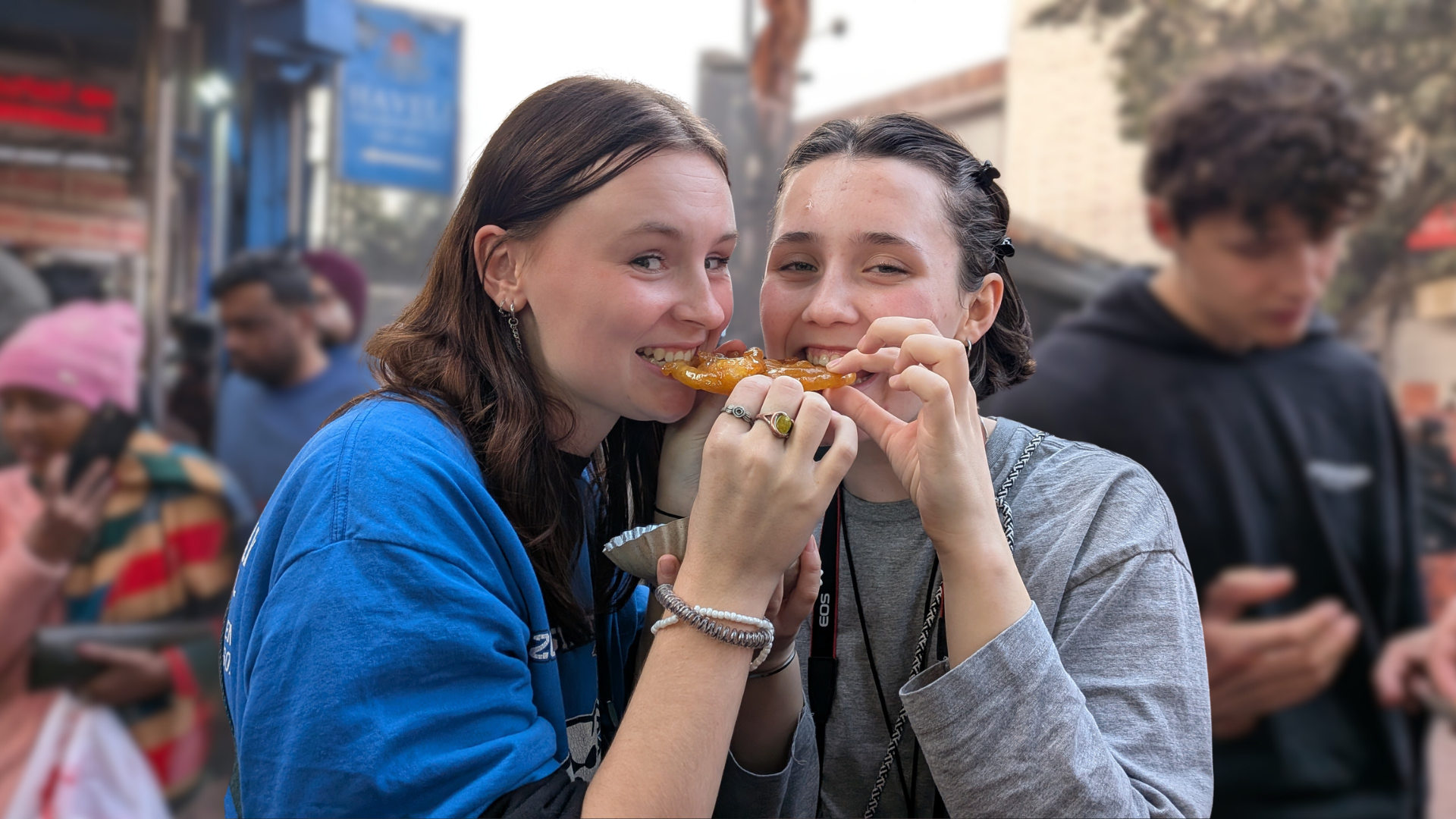
Chandni Chowk's labyrinth was laid out in 1650 by Shah Jahan's daughter, Jahanara Begum, as the Mughal empire's chief marketplace. The avenue stretched a kilometre from Lahori Gate to the edge of a reflective canal that gave the district its name — moonlight bazaar. That waterway vanished in the nineteenth century, paved over by the British, but the food economy it anchored never stopped. Today more than fifteen hundred shops and stalls press into the alleys radiating from the central artery, many occupying the same plots their founders claimed three centuries ago. Paranthe Wali Gali alone shelters six shops frying stuffed flatbreads in cast-iron kadhais, each claiming descent from a single family that arrived in the 1870s. Vendors fold potato, cauliflower, mint, and paneer into wheat dough, then submerge the discs in ghee until they blister and bronze. A few minutes south, halwais ladle batter into spirals of jalebi, the syrup still scented with saffron threads imported from Kashmir. The recipes are oral, handed down without measurement, adjusted by touch and colour rather than thermometer. This continuity makes an old delhi street food tour less a tasting menu than a living archive. The district's culinary density reflects its historical role as a convergence point for Persian, Central Asian, and North Indian trade routes. Kebab makers inherited Mughal court techniques — marinating meat in raw papaya and yoghurt, slow-cooking over charcoal pits dug beneath the pavement. Sweet shops still prepare kulfi in terracotta cones packed with ice hauled from cold storage depots built in the colonial period. Nihari, a dawn stew of slow-braised shank, simmers overnight in copper degs, served only between five and nine in the morning when the broth reaches its correct viscosity. Walking these lanes during the optimal arrival window between eleven and seven in the evening allows access to the full spectrum — morning stalls finishing their runs, afternoon chaatwalas setting up their carts, evening haleem vendors lighting their coal beds. The absence of an entrance fee reflects the public nature of the streets themselves; the cost is embedded in the food, typically ten to sixty rupees per item. Tour operators provide narrative context and navigate the sensory overload, guiding visitors past imitations toward the vendors whose techniques and lineage are verified by decades of neighbourhood reputation.
"The recipes are oral, handed down without measurement, adjusted by touch and colour rather than thermometer."
A step-by-step walkthrough of the visit — what you'll see, how long each stage takes, and the details that matter.
You step into Chandni Chowk just after eleven, the morning rush dissolving into the afternoon lull. Your guide leads you past the spice arcade, where burlap sacks of cumin and coriander spill onto the pavement, and turns into Paranthe Wali Gali. The lane is three metres wide, shaded by awnings strung between upper-floor balconies. You watch a cook press dough into a flat disc, fold in a fistful of spiced potato, then lower it into a kadhai of bubbling ghee. Three minutes later it arrives on a steel plate, bronze and layered, with a side of tamarind chutney and pickled carrot. You continue south toward the jalebi stall, where a vendor pours batter in concentric loops into a vat of oil heated to exactly one-ninety Celsius. The spirals puff and turn amber, then get lifted out and dropped into a sugar syrup infused with cardamom. You eat one while it is still warm, the shell crackling against the saturated centre. Around the corner, a nihari cart is closing for the day, its copper deg nearly empty. Your guide secures the last two bowls — shank meat in a rust-coloured broth, thickened overnight, scattered with ginger matchsticks and coriander. You sit on a wooden bench and eat it with tandoori roti pulled from a clay oven embedded in the wall.
The area is accessible 00:00–23:59, though the best variety is found 11:00–19:00.
The narrow, crowded lanes of Old Delhi make traditional wheelchair access difficult.
The best arrival window is 11:00–19:00 for optimal food variety and traffic avoidance.
Public street areas have an entrance fee of 0 INR.
Small bags are recommended, but large luggage is unsuitable for this Old Delhi street food tour.
Yes, but families should note the crowded conditions of the Old Delhi street food tour route.
Photography is permitted in public areas, provided you are respectful of local vendors.
Take the Delhi Metro Yellow Line to the Chandni Chowk station for your tour.
Cancellations made at least 24 hours in advance receive a full refund for Old Delhi street food tour tickets.