
3 hr 30 min
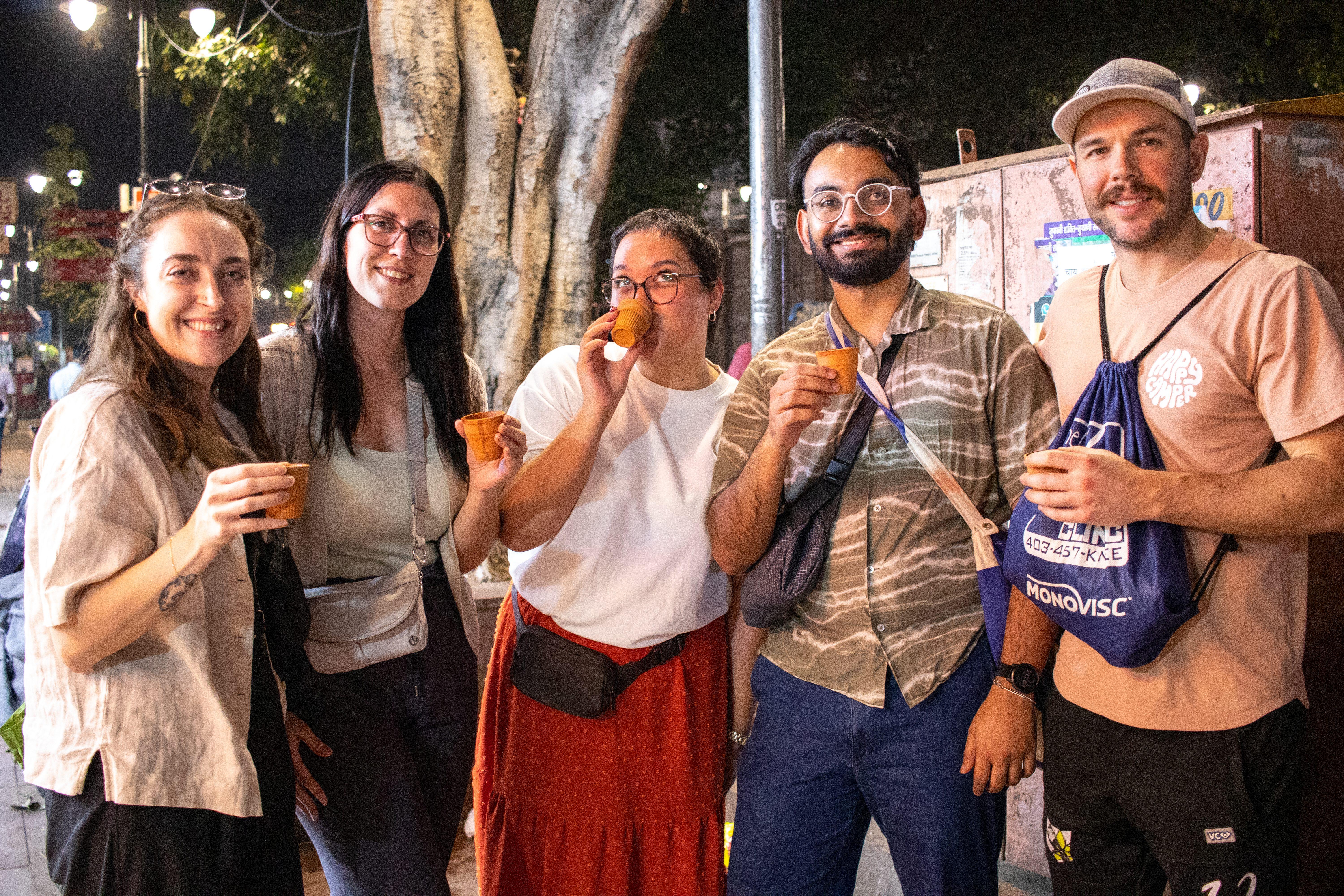
Old Delhi Night Food Walk
A generous evening feast through historic lanes as the city lights up and street grills come alive
Reserve
Hand-picked by our editors — only the best 5 food walks from 24 reviewed.
Verified partners for every tour, free cancellation where available, and instant confirmation on every booking.
3 hr 30 min
A generous evening feast through historic lanes as the city lights up and street grills come alive
Reserve
4 hr
Savor authentic Delhi specialties and explore historic lanes by rickshaw on this culinary journey
Reserve
8 hr
Explore India's capital with a personal guide, from ancient mosques to modern monuments
ReservePrices from verified partners. Availability updates in real time at checkout. Free cancellation policies apply where shown.
The landmarks, rooms, and views travelers on this tour remember — all visible on a single visit.
Professional guides provide curated hygiene and historical narratives, whereas self-guided visits offer total autonomy for culinary adventurers. While an old delhi food walking tour tours the labyrinthine lanes with expert logistics, self-directed roaming allows travelers to linger at specific chaat stalls at their own discretion.
| Feature | Top pick Guided Walking Tour | Self-Guided Exploration |
|---|---|---|
Ease of navigation |
Expertly managed routes | Requires map and local intuition |
Safety and hygiene assurance |
High; curated vendor selection | Variable; requires personal judgment |
Access to hidden food stalls |
High; local expert knowledge | Lower; relies on popular visibility |
Local cultural context |
Detailed historical narratives | Limited to personal observation |
Cost efficiency |
Fixed per head pricing | 0 INR entry; pay-as-you-eat |
Flexibility of pace |
Fixed group schedule | Fully customizable itinerary |
| See tickets → |
Verdict: Choose the guided option for deep cultural insights and curated health safety, or opt for a self-guided experience if you prefer the spontaneous rhythm of independent street food exploration.
Choose your ticket, select your date, and reserve in under two minutes. Secure checkout handled by our verified partner.
Instant confirmation by email, with a mobile voucher you can save offline. No printing, no queuing at a collection desk.
Arrive at the entrance, show your voucher on your phone, and walk in. Most tickets include priority or skip-the-line access.
Practical details for your visit straight from our verified partners — hours, access, rules, and how to get there.
Chandni Chowk, Delhi, 110006
Main intersection near Metro station
Use the Yellow Line metro to Chandni Chowk station. It provides direct access to the heart of the area.
Hire a cab to the nearest metro station to avoid restricted narrow lanes. Walking the final stretch is required.
Modest clothing is recommended when visiting religious sites within the area. Comfortable walking shoes are essential for navigating uneven stone surfaces.
Keep belongings secure in front-facing bags as the area is densely populated. Avoid carrying large suitcases or unnecessary valuables during the old delhi food walking tour.
Photography is permitted throughout the public streets of Chandni Chowk. Always ask for permission before capturing portraits of local vendors.
Navigating the old delhi food walking tour requires movement through narrow, crowded lanes. Wheelchair access is challenging due to frequent obstacles and high foot traffic.
Mobile phone signals are strong throughout the area. Use navigation apps for real-time traffic updates when planning your old delhi food walking tour.
Children are welcome on the old delhi food walking tour, though supervision is required due to the constant motion of rickshaws. Choose shorter walking routes to maintain engagement.
This street food walk focuses on local specialties like chaat and paranthas. Always verify vendor hygiene and choose stalls with high turnover.
Pets are not permitted in crowded street markets. Leave animals at your accommodation.
The old delhi food walking tour is best experienced with a local guide to manage complex navigation. Ensure you remain aware of your surroundings at all times.
Best time to go, insider tips, nearby landmarks, and the cancellation fine print — flip through to skim what matters to you.
How crowds, weather, and events shift across the year.
March to April offers pleasant temperatures for extended walking tours. Crowds are moderate before the summer heat arrives.
May to August is very hot, making the 17:00–21:00 arrival window essential for comfort.
September to November features cooling air and festive atmosphere. Ideal for culinary exploration.
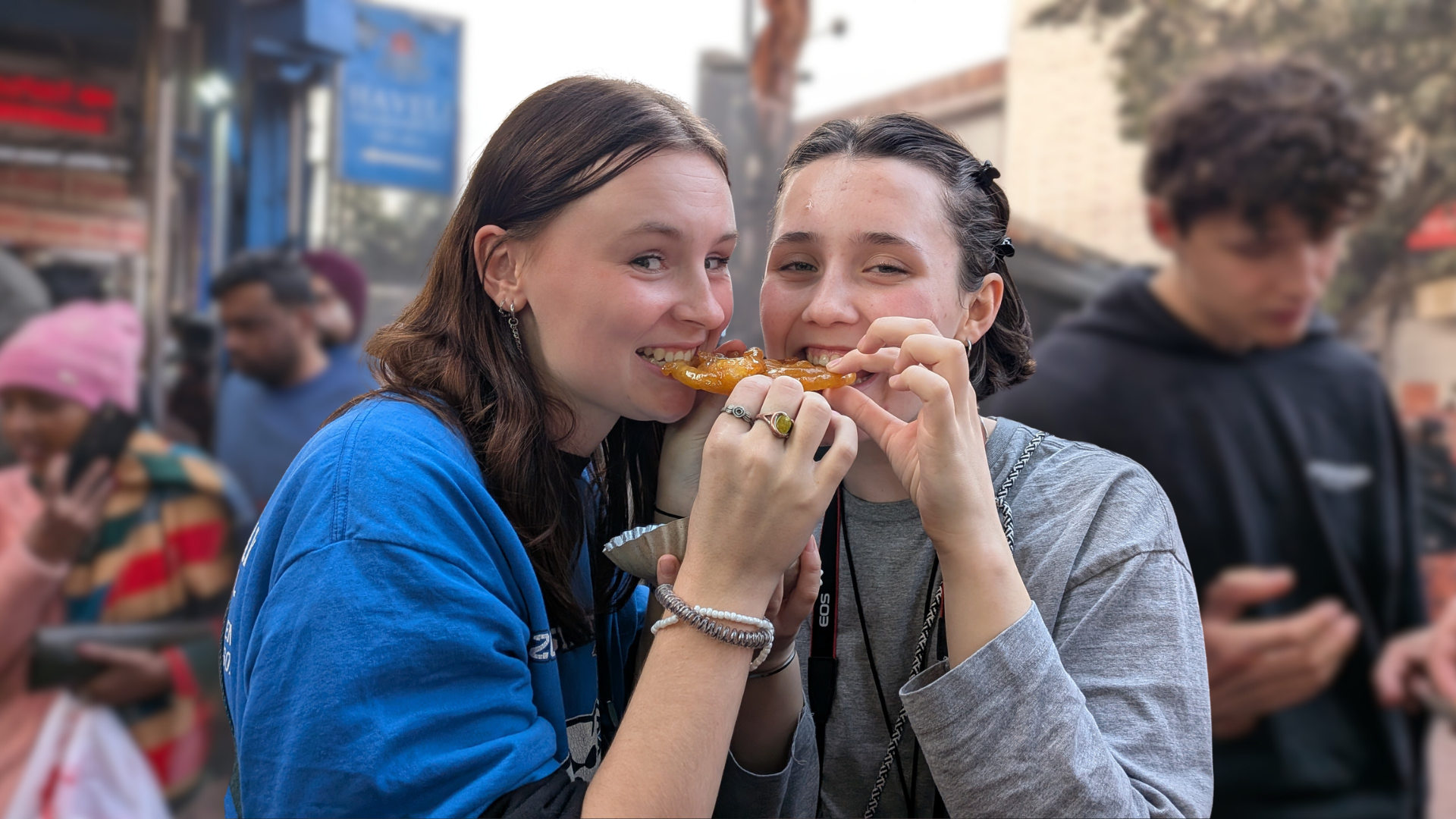
December to February is cool and crisp. Popular for warm street foods like jalebis.
Small details that turn a good visit into a great one.
Drink bottled water consistently throughout the walk. The high temperatures can cause rapid dehydration.
A professional for the old delhi food walking tour provides cultural context. They help navigate the maze-like streets safely.
Street vendors rarely accept digital payments or cards. Keep small bills for snacks.
The alleys are shared with cycle rickshaws and carts. Always stay to the side of the lane.
Allocate time for Khari Baoli. It is a sensory experience unique to this specific heritage area.
Non-bookable sights within a short walk — free to visit, easy to pair.
A large 17th-century mosque with red sandstone architecture.
A historic Mughal fort complex with massive red sandstone walls.
The largest wholesale spice market in Asia.
A peaceful temple known for its bird hospital.
Flexible, no hidden fees.
As this is a public street experience, no entrance fee is required. Refer to your specific tour operator booking terms for cancellation windows regarding guide services.
Hand-picked options within walking distance — pick a district for vibe, or a specific hotel for convenience.
A restored heritage mansion offering luxury rooms.
Several shared-room options located near the metro station.
Various comfortable hotels situated around Old Delhi.
Chandni Chowk was laid out in 1650 by Shah Jahan's daughter Jahanara Begum as a moonlit avenue flanked by reflection pools and caravanserais. The pools are gone, but the labyrinth of lanes branching from the main thoroughfare still holds food vendors whose recipes predate the Raj. Paranthe Wali Gali—a five-metre-wide alley devoted entirely to fried bread—has been serving pilaf-stuffed parathas since the 1870s. Karim's, tucked behind Jama Masjid, claims descent from a cook in Shah Jahan's royal kitchen and still grinds its own spices every morning. The culinary density of Old Delhi rivals any quarter in Asia. Within a ten-minute walk of Chandni Chowk metro station, a visitor can sample slow-cooked nihari from cauldrons that simmer overnight, syrup-soaked jalebis fried in century-old kadhai, and kulfi malai churned in terracotta pots packed with ice hauled from Ghazipur. The district's food economy operates on inherited knowledge: most vendors learned their craft from a parent or uncle, and many shops occupy the same corner their grandfather worked. This continuity of technique is visible in the kitchens—cast-iron tawa griddles worn concave by decades of use, tandoor ovens patched with river clay, copper vessels re-tinned by the same family of kalaiwallas who have circulated through the lanes since Partition. Old Delhi food walking tours navigate this density with purpose. Licensed guides lead groups through arterial streets—Dariba Kalan for saffron traders, Khari Baoli for wholesale spices—and into narrower galis where the best chole bhature stalls have no signage and open only until their dough runs out. Evening walks align with the district's rhythm: kebab grills light at dusk, haleem pots reach their optimal simmer by seven, and the crowds thin enough by eight to allow conversation with the cooks. Tours typically span two to three hours and include eight to twelve tastings, moving from savoury street snacks to Mughlai mains and finishing with milk-based sweets from shops that have supplied Delhi's wedding banquets since the 1920s.
"Within a ten-minute walk of Chandni Chowk metro station, a visitor can sample slow-cooked nihari from cauldrons that simmer overnight, syrup-soaked jalebis fried in century-old kadhai, and kulfi malai churned in terracotta pots packed with ice."
A step-by-step walkthrough of the visit — what you'll see, how long each stage takes, and the details that matter.
You meet your guide at Chandni Chowk metro station's Gate 3 as the evening call to prayer drifts across from Jama Masjid. The first stop is a corner stall where a cook flips parathas on a tawa griddle slick with ghee—you taste one stuffed with spiced potato, the crust shattering under your thumb. The guide leads you into Paranthe Wali Gali, a lane so narrow two people cannot pass shoulder-to-shoulder, and orders a paneer-stuffed variant from a shop with walls blackened by a century of coal smoke. You cross into Matia Mahal, where kebab vendors fan charcoal grills and the air thickens with cumin and smoke. The guide hands you a skewer of seekh kebab wrapped in roomali roti—tissue-thin bread pulled across an inverted kadhai—and you eat standing at the stall while a cycle-rickshaw inches past. Three doors down, you try a bowl of nihari, the beef shank stew ladled from a pot that has simmered since four in the morning, and the guide explains how the marrow dissolves into the gravy overnight. The walk ends at a sweet shop near Fatehpuri Masjid, where a vendor pours rabri—milk reduced to the consistency of clotted cream—over warm jalebi coils. You take the first bite and the sugar syrup runs to your wrist. The guide points out the copper degchi the milk was reduced in and mentions that the shop's founder supplied sweets to Nehru's first Republic Day reception in 1950.
The area is accessible 24 hours, but we recommend visiting between 17:00–21:00. This is when the old delhi food walking tour stalls are at peak activity.
No, there is 0 INR entrance fee required for the public street area. This is a public space used for our old delhi food walking tour tours.
Yes, children are welcome on the old delhi food walking tour, though they must stay close to parents due to crowded lanes.
The best arrival window is 17:00–21:00. This avoids the midday heat while ensuring a high-energy old delhi food walking tour experience.
The terrain is narrow and crowded, which can be difficult for wheelchairs. The old delhi food walking tour mostly traverses busy pedestrian-heavy lanes.
Please avoid bringing large bags or drones to the old delhi food walking tour. Keep valuables secured in front-facing pockets.
Yes, you can take photos. Please respect local vendors on your old delhi food walking tour by asking before filming them.
Bring cash, water, and comfortable shoes for your old delhi food walking tour. These are essential for navigating the old delhi food walking tour tour route.
Use the Yellow Line metro to Chandni Chowk station. This is the primary transit hub for every old delhi food walking tour.
Since the area is public, cancellation policies typically apply only to the tour operator services. Check your booking for specific details.